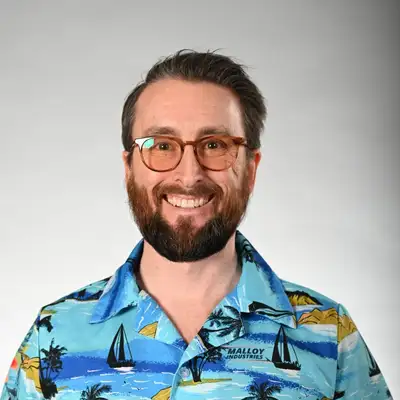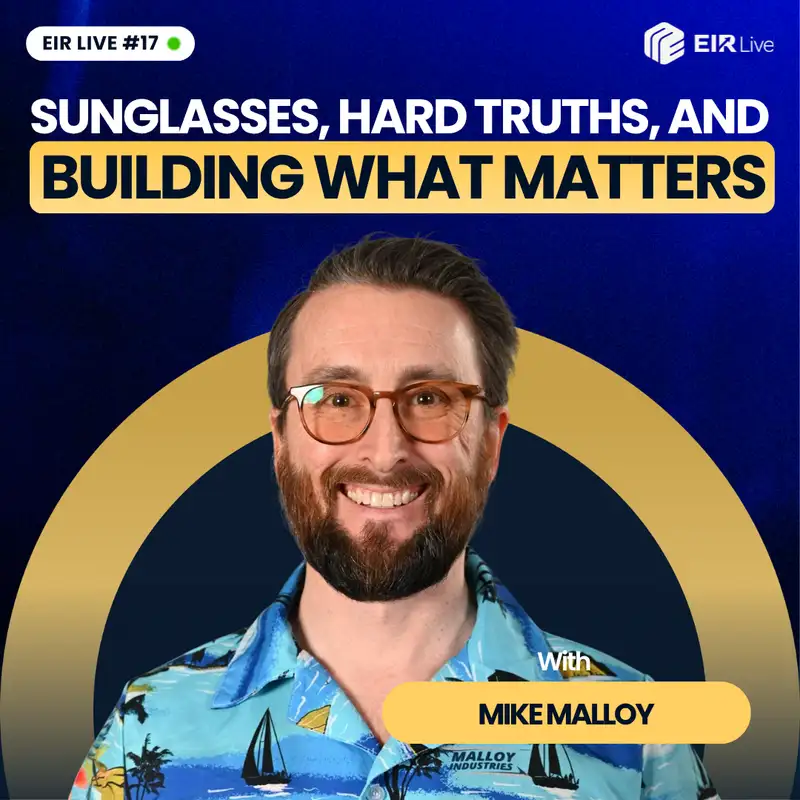
Episode 17 - Sunglasses, Hard Truths, and Building What Matters with Mike Malloy
80% done by somebody else is 100% freaking awesome. That just unlocked that like, Oh, everything doesn't have to be perfect. I don't need straight A's in every deliverable, every email. Like, did it get the point across? Like, okay, is someone going to get super mad if there's a typo or like it wasn't exactly in my voice because some of my team said, No, they're not.
Mike Malloy:And how to not only communicate effectively, but like identify the things that like you're really not that great at. I'm a great idea guy. I'm a great high energy visionary. I'm great at pattern matching. I'm not great at follow through.
Ilya Tabakh:Welcome to EIR Live, where we dive into the lives and lessons of entrepreneurs in residence. I'm Ilya Tabakh, together with my cohost Terrance Orr, ready to bring you closer to the heartbeat of the innovation and entrepreneurial spirit. Every episode, we explore the real stories behind the ideas, successes, setbacks, and everything in between. For everyone from aspiring EIRs to seasoned pros, EIR Live is your gateway to the depth of the entrepreneurial journey and bringing innovative insights into the broader world. Check out the full details in the episode description.
Ilya Tabakh:Subscribe to stay updated, and join us as we uncover what it takes to transform visions into ventures. Welcome aboard. Let's grow together.
Terrance Orr:All right, we are back for another episode of EIR Live. Today we have my good friend, Malloy, you know, the man, the myth, the legend, and a bunch of other things that you will learn about today in today's episode. Mike has a long storied career and it is no way that I would ever be able to do it the justice that he's gonna give it, you know. So I'm gonna ask Mike to open it up and give the audience a little bit about his background we're going to dive deeper into as we move throughout the episode today. Mike, thank you for having us.
Terrance Orr:Thanks for being on. Thanks for hanging out with us today. Can you tell the people a little bit more about your background, man?
Mike Malloy:My pleasure, Terrance. It is a delight to be here. And if we go all the way back to the beginning, you know, it was a dark and stormy night, 09/29/1986, with Tom and Kathy Malloy. You know, I've got grew up in Maryland. I've got previous experience as a Deloitte consultant, traveling sunglasses salesman, startup CEO, Georgetown University entrepreneur in residence.
Mike Malloy:I was an incubator program director, adjunct professor, and now founder and CEO of Malloy Industries.
Terrance Orr:Awesome, man. Awesome. See, very clear and concise. You know, he's always, you know, to the point. But now we're going to talk about this nonlinear career path, right, that you've had from the very beginning.
Terrance Orr:You said you started from being a Deloitte consultant, okay, at the very beginning, but you went to school for CS, right? Yeah. You went to school for computer science and that's not the typical path that one would take directly out of a computer science program. Walk us through what made you choose Deloitte and why did you start your career there?
Mike Malloy:Great question. So I graduated from Boston College in 2008 as a math and computer science major. And one of my buddies, Mike Schuller, was a year older, was a comp sci major. He got a job at Deloitte. So he came back senior year in the fall, did a little, you know, five minute talk in class and was like, Yo Malloy, you should apply for Deloitte.
Mike Malloy:Was like, What's a Deloitte? I don't know. I was kind of a comp sci nerd. And super glad that I did loved it, it ended up being the number one place to launch your career in 2008. That was also when you know, whole financial crisis happened.
Mike Malloy:And I actually spent the next four years with Deloitte, doing failed bank closings. And Deloitte was kind enough to pay for me to go to Georgetown University in DC, I got my master's in computer science. And Georgetown has an entire professional career track from computer scientists to sunglasses sales. There's a lot of kids there who study comp sci and then spend a year building a social enterprise sunglass company. I bet I got a pair right here on nights and weekends.
Mike Malloy:And then eventually, I graduated from grad school in May, I quit my job in June, and I moved to Dewey Beach, Delaware to sell sunglasses. And, you know, mom and dad were absolutely thrilled with all of the money they had invested in my sunglass sales higher education.
Terrance Orr:Oh man, that's incredible. You mentioned something very unique there, right? You skipped over very quickly but 2008 was the year that things were going to places that nobody even imagined, right? So, and somehow, you know, you were graduating with still to this day, a very prominent degree in CS, went into consulting, started doing these other things and then you got into sunglasses sales, you know, walk us through what you learned being a sunglass salesman, you know, and how that translated over to all the incredible things that you're starting to do today that we will build up into in an episode.
Mike Malloy:Absolutely. And I think it's worth rewinding to like elementary middle school, Mike, where I grew up going to the pool every day. Was a lifeguard was my first job when I was 16. And I always enjoyed the funky dollar store sunglasses. And I even set the high score for selling candy bars as a kid going door to door raising money for the swimathon.
Mike Malloy:And a lot of what I learned in the sunglass business was sales, both selling direct to consumer, but really selling B2B to surf shops, to golf country clubs, to eye doctors offices, and understanding the complexities of it. I went to what I would call automobile university, where I was driving around listening to tapes or like audiobooks of Zig Ziglar, Grant Cardone, you know, some of the greats, and I would literally just drive from Ocean City, Maryland to Dewey, Rehoboth, I take the ferry, go to Cape May, I do the whole Jersey Shore with a white van full of sunglasses, listening to sales tapes, popping in any surf shop or eye doctor that I saw along the way. You know, there were not as many or any entrepreneurship classes or programs, you know, for students back then. But I was a student of the game, you know, and I made a point of working out of co working spaces in the DC area. I ran a co working space, Punch Rock, for a couple years for social entrepreneurs.
Mike Malloy:And the core of our business was a social mission similar to Tom's shoes with a buy one, get one model. And most of the different steps along my career, there's this, you know, Jesuit education of men and women for others, let's go set the world aflame. I like to paraphrase biggie small, low margin, low mission. You know?
Ilya Tabakh:It's amazing. I think, you know, what we found in in entrepreneurs and residences, you know, you hear both Terrance and I use the word translator quite a bit. And and it strikes me a little bit how you, you know, pretty early in your journey picked up a a few key dialects because, you know, I also have a couple computer engineering degrees, and I can tell you that that most of my sort of cohort and the folks that I was in school with were not abundant and excessive communicators. And so, you know, being able to sort of wield the sort of technical computer science perspective, but also be able to sort of jump in and understand where people are, you know, kind of why why this pair of sunglasses to to paraphrase from Grant Cardone who you quoted earlier. It is an interesting perspective, and then when you add kind of the consulting part to it, you know, it's just it's so many different lenses, and it's cool that you got that opportunity kind of early.
Ilya Tabakh:And so I just wanted to kind of point that out before we go on because I think that, you know, especially from the technical side as well as kind of the people side, you know, it's not normally one or the other. It's it's both where you get some pretty interesting outcomes.
Mike Malloy:Absolutely. And I also went to school with a lot of people who would not be on a podcast right now and would not have the social or communication skills to navigate a lot of the different personas and motivations of people in business, which I find myself pretty adept at, as well as kind of the pattern recognition. You know, at this point, I say like, I understand how computers work and AI well enough to use them. Like, I'm not the guy sitting in a basement coding, you know, for twelve hours a day. I'm out there talking to people understanding what are their problems and knowing that I have certain solutions or templates or tools or people, you know, who not how, at this point in my career that can help solve those problems that people are facing for the first time.
Mike Malloy:There's somebody who's done it six times, they failed four times in the past two times, they crushed it. Here's the solution. Like, let's just go, go take care of it for you. I think that's one of the big benefits for a lot of EIR is like they've been around the block a few times and, you know, have some proven methods that may work. Results may vary.
Mike Malloy:Everybody's their own unique butterfly, snowflake, whatever. And I also am not a fan of writing prescriptions and saying, Hey, go do this. It'll definitely work. But let me tell you a story about what I did and then you can, you know, adapt it as needed for your own experience.
Ilya Tabakh:Yeah. What what I found over the years is that actually is the best advice. The here's what you gotta do, Mike, or here's what you gotta do, Terrance, is has a very limited shelf life typically. Right? And and so that was, like, one of the big lessons for me is helping, you know, thinking through not what does Ilya do, but, know, what is Mike trying to get done, And then how is relevant experience connection, whatever helpful.
Ilya Tabakh:So, you know, that's the theme that's come up on a on a couple different conversations for us as well.
Mike Malloy:And I wanna give a question framing for the listeners. How might we insert thing you want to accomplish? And it really prompts this like divergent brainstorming to come up with a list of as many things as possible at how we might do this. I was literally doing it this morning and on Friday with my team as we're thinking about goals for, the next eight weeks. Like, how might we achieve these things?
Mike Malloy:There's no right or wrong answer. Just like get them all out there. And it's a great thing as an EIR if you're meeting with a student or an entrepreneur or somebody who needs help in a certain area, like how might we achieve that? And how might we measure success along the way? Like how might we identify like a lead indicator, not just a lag indicator, where like by the time we get that result for that metric, it's too late to change anything.
Mike Malloy:But what are the inputs on the front end that could increase the likelihood of success and decrease the downside risk?
Terrance Orr:Mike, I love hearing you talk about this, man, and talking about how you've sort of made this transition a bit, right? Earlier you just mentioned Who Not How, right? Really good book that I love by Dan Sullivan, which I'm sure you're an avid reader and you've probably read it as well and I know you've read it. I know it's back there. Right?
Terrance Orr:Talk a little bit about that shift, right? From being somebody who's always in the trenches, you're always doing the doing, you're always getting your hands dirty, but as you scale yourself as a builder, as an entrepreneur, have to find other people with talents, right? That you can leverage to scale yourself beyond where you're at today. And I don't know about you, but delegation was hard for me. Right?
Mike Malloy:Delegation is hard for everybody.
Terrance Orr:And when I had to finally make that transition, I had to get some coaching, I had to go read some books, I had to go do some different things. Talk to our listeners about you making that transition, right? To the who, not how to scale yourself, right? To get beyond where you are.
Mike Malloy:It's uncomfortable. Your infinite potential exists on the other side of your comfort zone. And to delegate to give it to somebody else, especially when like, I know it would be great if I did it. But here's the thing, I can't do all of the things. And like in the sunglasses era of Mike from like '25 to '30, I just tried to do all the things and maybe I had some interns every once in a while with a rotating cast, but it was like the mic show and I had to do all the stuff.
Mike Malloy:Fast forward a decade later, like Malloy Industries is not the mic show. Like I have a core team of 12 people around me that are all really talented in lots of things. And I think a really big unlock for me a few years ago was reading the book Buy Back Your Time by Dan Martell. And in it, has one of my all time favorite quotes, 80% done by somebody else is 100% freaking awesome. That just unlocked that like, Oh, everything doesn't have to be perfect.
Mike Malloy:I don't need straight A's in every deliverable, every email. Like, did it get the point across? Like, okay, is someone going to get super mad if there's a typo or like it wasn't exactly in my voice because some of my team said, No, they're not. And how to not only communicate effectively, but like identify the things that like you're really not that great at. I'm a great idea guy.
Mike Malloy:I'm a great high energy visionary. I'm great at pattern matching. I'm not great at follow through. And that's why I have a chief of staff and an ops manager and an executive assistant that are all full time people like being my arms and legs to implement and execute the things that need to get done within the business. And it's been an iterative process, I think, over the past three years as we've grown.
Mike Malloy:There's been things that I shifted left to Tina, who's my chief of staff. And then she had kind of filled up her play, like, hey, we need Monty now. Okay. And then we thought of his play. And then December, we got Bell and you continue to grow and realize that, you know, other people are super duper smart.
Mike Malloy:And Terrance, you brought up the challenge with delegating. I think some people struggle with it, because they think, Oh, I just told you what to like, what to do. Why can't you do it the way I do? Well, nobody else has the same lived experience as you. Nobody intimately knows the system, the machine, the business, whatever it is, as well as you do.
Mike Malloy:And you probably did a poor job communicating it. And so it's not just go do this thing, but it's like, start with like, what's the definition of done? I call it the 10 eighty-ten rule, where you want to start by explaining what is the project? What's the end in mind that we're looking for? All right.
Mike Malloy:And why does this matter? Dan Sullivan, who wrote Who Not How, he also has something called the impact filter, which is something we use for our projects here at Malloy Industries to go over like the purpose, why it matters, if we're successful, what good things will happen, if we fail, what bad things will happen, and then, okay, here are some steps. And so the 10 out 10, you're there for the first 10%, and then you leave for 80%. They own it. Okay, you're delegating an outcome, not step by step tasks.
Mike Malloy:And they may have zigged where you zagged, but if they're still getting to the goal line, and then you come back at the 10 yard line to run the first and goal play, and kind of review it, maybe tweak the color, change some of the words a little bit and say, Okay, great, we're done. That is a much more effective way to lead than just saying, Hey, go do this thing, but they don't really understand why. And then maybe you jump in and micromanager, you rip it back. Like, that's the worst when people rip it back because it didn't work, and then they're they're scrounging, I can't delegate that person's stupid. Like, well, no.
Mike Malloy:You probably did a stupid job delegating it.
Ilya Tabakh:You know, one one thing that caught that hasn't really come up in our conversation so far, but when we were getting ready for the car and we're talking through it, you were sort of talking about, you know, kinda having a core value of being, you know, relentlessly generous and that being a little bit of a north star for you. And it's interesting because, you know, I think the multiple viewpoints being able to speak different dialects, but but ultimately being mission somewhere between mission driven or having some kind of compass is another theme that that shows up. I wanna sort of bring that up and maybe ask, you know, what does that mean to you on a, you know, on any given Tuesday? You know, how does that play out in your life? Because I I did it kinda caught caught my ear when we dug into it.
Ilya Tabakh:It is, you know, sort of that principle was pretty deep in in your foundation. So, wanted to spend a little bit of time talking about that here.
Mike Malloy:Zig Ziglar once said that you can have anything you want in life if you help enough other people get whatever they want. And that is a core belief of mine. I also believe that we were put here on this earth to serve other people, not to selfishly hoard gold or do whatever. Like, I wake up every morning thinking, Hey, who can I help today? Like, how can I add value?
Mike Malloy:You know, we kicked off with a new client this morning who's bringing on a fractional ops person from us. And he vulnerable was like, You know, I don't think I have like all my documentation or like SOPs are really that well. Oh, dude, let me just send you this thing on how to do and document. You record it with Loom and Scribe. And I'll give you guys the link.
Mike Malloy:Have a a three minute post about it that you can share with the listeners. It's a super easy way to not like spend four hours making all your SOPs, but just the next time you do a thing that you don't want to have to do the next next time, you just push record on Loom and Scribe, you give some color commentary, it takes pictures and spits out an SOP. And that's 80 to 100% done. And remember, 80% is good enough. And so, I think I lead with generosity because one of my other strengths is being a hoarder of helpful resources and templates.
Mike Malloy:And like, I like to read all these books and then summarize them in like, okay, what's like a one or two page Google Doc worksheet, you can go do it yourself. As soon as somebody tells me what they need help with, I naturally can like pattern match that to, oh, you need this thing, you know, and I've learned to not give people 17 different things at once, but I might identify seven and then like slowly drip them out one a week for like seven weeks. And I can pretty quickly either write the emails or just tell Mel, Hey, you know, here's a list every Tuesday, send them an email, just link to this thing. Or they need to talk to somebody that I know, well, great. I'm pretty quick to say, Hey, send me affordable blurb and then I'll go make the intro when they, you know, do a double opt in.
Mike Malloy:I do give them a little bit of homework to say, describe yourself so I can do a better job presenting it. Yeah, but I think it's really important that you don't expect the person you help to be the person who then pays you back. If you just deposit the positive karma into the universe, there's like seven or 8,000,000,000 people, somebody else can come back in and help later with something you didn't even know you needed help with yet.
Ilya Tabakh:Just to pull on that thought just a little bit. It took me a while in my career, you know, to realize how, you know, how many turns are really in this game. Right? And and the fact that
Mike Malloy:It's an infinite game.
Ilya Tabakh:That's right. And and and really the transactional nature of things is not very transactional. It's kinda funny from my perspective because I've also had a many different perspectives in many different fields. And still, you know, similar people show up and you just see people again. And not to say that that's why you do it, but, you know, that that scope and that perspective is really interesting.
Ilya Tabakh:I think the other thing that just caught my ear a little bit is, you know, the ability of people to communicate clearly and and by that clear communication sort of manifest, create the things and the connections that they need in the world, you know, because that that ask for, hey, a bullet or a quick blurb, sometimes you get, you know, two pages back, and that's very hard to sort of activate that that heuristic or, you know, oh, you know, they need to talk to Mike or they need to talk to Terrance or they need to talk to, you know, some other person that I know really well. That that sort of ability to be like, you know, what do you need and how can I help? Being able to answer that question really cleanly is a bit of a superpower, especially if you're kinda talking to the right folks. So that that's kind of another thing that I didn't appreciate in my earlier years, but you just kind of reminded me of the value of.
Mike Malloy:Absolutely. Real quick, just piggyback on that and say, you can give and give and give. You also have to be open to receiving. Otherwise, you're going to get super burnt out. And if you think, Oh, I'm not worthy, like, I shouldn't accept from that person if I or if I help them with this thing, then like, I got to repay them right away.
Mike Malloy:And there's a scoreboard like, no. Like, if someone says, Hey, do you need help moving that heavy furniture into your car outside of Crate And Barrel? Yeah, I do, man. This thing's super heavy. Like, thank you.
Mike Malloy:You know, like, just receive the help and be open to it. I think it's one of the, like, five laws of stratospheric success from, The Go Giver, a great book on giving.
Terrance Orr:Absolutely. And I also think, you know, while we're on the spirit of reciprocity, right? Like people, you give things and put them into the world, like you said, right? And at some point those things come back to you. It might not be this year or next year or five years or it might not even be from the same person you gave it to.
Terrance Orr:Right? It might actually be from somebody that's in their ecosystem or in their network. Right? And you know, I've been a recipient, right? Of your kindness and generosity, Mike along the way.
Terrance Orr:And I also think you do an incredible job at what I call watering your network, You know, making sure that your network grows with time as you grow as a human, as an entrepreneur, as a person, right? And I think, you know, there's something to be said about people who do well, right throughout their lives and their careers through trial and error. Eventually we get there and you want to find some way to give something back into the world and that's at every level, right. We can jump on a call, you can notify, you can figure out something. When I was trying to figure out how to scale, how I do the fractional work with the fractional community and scale that team around me almost in minutes, right?
Terrance Orr:You're like, Hey, have something right. That can help you scale that with time. So you're spending less time doing X, Y, and Z, right? Wildly helpful. Right?
Terrance Orr:To me. Right? So I think like, you know, for the people listening, you know, oftentimes give with no expectation in mind of receiving anything back, but at some point, right. Something will come back to you. Right.
Terrance Orr:In spades, you know, in my opinion.
Mike Malloy:And for the folks listening, I guarantee you have more helpful resources in your Google Drive and sent emails than you think. And if you were to spend fifteen minutes just like flipping through recent files from the past several months, some of those things could be templatized, just like take out whatever the client or project specific information is, but like, oh, this is just like a framework to solve this type of problem. And then create a Google Drive folder called helpful resources, literally what I have. And you just when you see cool stuff and you see cool stuff that other people did, just put in the folder, you know, and make sure it's named whatever it is. And, like, even on this call, in twelve seconds, I was able like, look up, oh, strategic coach impact filter.
Mike Malloy:You know, that's the thing from Dan Sullivan with the project purpose, importance, ideal outcome, best result, worst result, success criteria, like boom, that's how you make an impact filter. So, be thoughtful about just like curating things that could be helpful. And Terrance, to your point about like watering your network, when you find something cool, just like send it to five people or 10 people or like, I was reading a book, what's it called? The Way of Excellence on Saturday morning. And I read the little section about joy and I kind of underlined some of the stuff.
Mike Malloy:I just took a picture and I I wanna text it to one friend. And then my buddies, Svii, taught me that this scroll back where you just, like, open your text and you scroll and stop. And then you have to text somebody that's on that like five or six people there and I ended up sending it to like 20 people. And I had a bunch of conversations with old friends that I hadn't texted in like two and a half months, which is how far I'd scrolled and just sent them this thing on joy and was just like, hey, read this thought of you, you know, friendly reminder to sprinkle some more joy in your weekend.
Terrance Orr:That's right. That's incredible, man. And so let's let's move let's move it let's move it along to this time where you heard of this this very weird, odd title called the entrepreneur in residence, which we were talk we were talking about and touching on as we were sort of having this dialogue. Tell me, Mike, when was the first time ever you heard this term entrepreneur in residence? Did you know what the heck this thing meant?
Terrance Orr:And like, how did you get so involved in it at Georgetown? Because you've been around doing this as an EIR for a very long time, and have even helped to recruit some other entrepreneurs in residence. So talk to us a little bit about this.
Mike Malloy:So I had never heard of the word before. And so I graduated grad school in 2012, started a sunglasses company with a buddy of mine in 2011. And probably 2014 into 2015, I started just like hanging out in the business school at Georgetown one day a week. I also coached the Frisbee team and I would do office hours and I'd just be like, Hey, it's like students want to talk startups, I'm hanging on working, like you can come meet me by the coffee shop and I'm happy to give advice. And so, Jeff Reed, who's the he's like six'eight or whatever, why are my hands up there?
Mike Malloy:You know, he is the head of the Entrepreneurship Program at Georgetown and he was like, Mike, like, you know, we've got a handful of entrepreneurs in residence. Do you want to be one? I was like, Well, what does that mean exactly? He was like, Well, basically means you're going to help students as they have startup ideas. And they had like a summer launch program, which was like a six week mentoring program.
Mike Malloy:And I was like, I love mentoring. So I worked with a few startups that summer and I think they officially signed me up in fall for the school year. And over the past eleven years, I have worn so many different hats. I was the pitch competition czar for a few years, like pre COVID, where I would like organize like 12 different pitch competitions across campus with, you know, March Madness style bracket. And anything that involves a big check, I'm usually interested in.
Mike Malloy:I'm like, that sounds fun. We have a Bark Tank pitch competition that Ted and Zach Leonez's family help fund. Chalk Talks used to be like office hours from like five to 06:30 on campus. And then we even got an off campus house for like six students to live and kind of do entrepreneurial things, like have people come over, watch Shark Tanks and different stuff. I was the cool uncle and my beloved friend Pat Henriques was the fun auntie.
Mike Malloy:And so, like, we had a lot of fun being the grown ups to, you know, organize an off campus entrepreneurship house, was a
Terrance Orr:great
Mike Malloy:way to, you know, get students interested in it. And what I love about it is like, let me see if I can pull, students graduate and they go off and they do really cool stuff. And like one of the kids who was in the yellow house was entrepreneurship house, like six years ago, I saw him at a venture capital event in January. And like, yeah, he's been out of college for five years. He's getting ready to get his MBA, UVA.
Mike Malloy:He's like, call me up on life. Was, dude, you were just like, it's like awkward college kid I knew, you know, five, six years ago, you know. And so, it's cool to see people as they navigate throughout their careers. And as an entrepreneur resident, I feel like I'm uniquely positioned to help at those inflection points. We're like, Hey, I might quit my job.
Mike Malloy:I might start something new, Or I might do this off the side of my desk and see if I can build something that's gonna make a little bit of money before I quit, which I do recommend you don't quit Friday and start something Monday. Like, I did way born for a year with a delayed paycheck before I was like, I had some money saved. I'm gonna make a run at this.
Terrance Orr:Yeah. Incredible. So there's a few things I wanna pull out of that. One, EIR's usually don't apply for becoming an EIR. Usually somebody is tapping them to tell them what the heck the thing is and recruiting them to come and do it because they've seen them already doing things that mimics what the EIR is going to be doing.
Terrance Orr:You know? So that's the first thing I wanna pull out because oftentimes Ilya and myself, we would get notes on LinkedIn from different people. Hey, how do I become an EIR? Well
Mike Malloy:Just do it. You got to go do the work and be like, oh, that work that looks like EIR stuff, you know, like why don't you come over here and do it? That's You already have proven in somewhat of a public setting online or in person that like you have the skills.
Terrance Orr:But it's a weird thing too that a lot of our EIR's do not also coach Frisbee, my friend. So talk to me about how this whole Frisbee thing came about. I'm very keen to know about how this thing came about, why you're helping the future generation of leaders.
Mike Malloy:For sure. So in undergrad, I started playing frisbee like junior year at BC. I went abroad to Ireland. Let me take one step back. The best decision I've ever made in my entire life was starting to play Ultimate Frisbee.
Mike Malloy:Like full goosebumps, thank you, Korchak, my best friend, who's best man at my wedding, got me into college. He then Korchak went to med school at Georgetown and I had three years of eligibility left to keep playing. So, I went to grad school at Georgetown to play Frisbee. I just had to study computer science. All right.
Mike Malloy:And so, I played on the club team from 2010 to '12. I then coached the B team for a couple years. I was assistant coach for the DC Breeze, which is the professional Frisbee team. And then I coached the A team at Georgetown for four years, including a trip to the National Championship Tournament. We finished like seventeenth in the country.
Mike Malloy:We were like number four on SportsCenter's top 10. But none of that matters as much as the fact that Frisbee is just a way for me to teach leadership to eighteen to twenty two year old men who chase a piece of plastic around on a field from like ten to midnight on weeknights, and then we'd go drive seven hours away to play seven games of Frisbee in a weekend and like get back by midnight Sunday night, sore and exhausted, but had a ton of fun. Yeah. And the, you know, how do you work on a team? How do deal with conflict?
Mike Malloy:How do you overcome adversity? How do you communicate? How do you create psychological safety? So, like the freshmen in the room feel like it's okay to say something in some of those long team meetings. There's just a And like, the principle like, what's best for the team is always more important than what's best for the individual.
Mike Malloy:There's a lot of leadership things that are baked in there that also apply to entrepreneurship, that apply to, you know, families and companies and just like how we as as humans can become the best versions of ourselves.
Ilya Tabakh:Yeah. It's funny because in a lot of the conversations when we reach out, you know, Terrance is probably the only EIR that actually knocked on my door first. Typically, was in my journey the first person that would, you know, reach out to an EIR and be like, hey. I'm doing this thing. I can't be the first one.
Ilya Tabakh:Tell me about and the first thing that always comes back is I'm probably not like the other EIR's, but right? That's like, I would say 95% of the conversations opened. And and I think what that leads to is, you know, you're talking about this nonlinear path through life, let alone professional life. Right? And I think, you know, and as we were talking earlier, it really is a little bit of a feature, not a bug.
Ilya Tabakh:Right? I think it's really important to be able to draw on, you know, deep wells of experience in different disconnected parts of the world. You know, you can't have silos in your own life if you're gonna connect the dots for others. And so it just kinda you know, I think we've punctuated that from a a a few different angles in an interesting way. But but I thought that was kind of a you know, especially as we add around the screen, there's a lot of sort of asymmetric nonlinear experiences.
Ilya Tabakh:And so, you know, you you combine forces in in that kind of network and you get a pretty interesting set of insights. And so I just wanted to to sort of call that out because and the other thing is, like, you, like, personality wise, like to connect those dots. Right? And so just listening to you talk about the your helpful documents and sort of going through and watering the network and things like that, you know, imagine the the compounding interest that that effort has had over the years for, you know, folks that you're staying in touch with, you know, just for the world, not even kind of for you personally. But it's it's kind of an interesting set of intersecting both hobbies and and instincts maybe for lack of a better term.
Mike Malloy:Absolutely. And I think there's power in integrating your whole self and also recognizing that the different nonlinear steps throughout life, the last safe investment is in yourself. And every all the skills you learn and acquire the relationships, you know, whether or not the thing you're working on right now works out, you will then have a better idea how to solve the next problem, you know? And I will also pull back the curtain here and say, like, we've talked about the Sunglass journey. Part of that journey was raising more than $500,000.
Mike Malloy:I did a crowdfunding campaign. We raised $10 in a day and a half. And it was a pretty wild ride. But ultimately, learned that there's four profits, there's non profits, and then there's no profits. And I went bankrupt at 30.
Mike Malloy:Like, it did not work out. It crashed and burned pretty miserably. And this was like a year or so into being an entrepreneur in residence at Georgetown when I had to go through bankruptcy. And I went to Jeff Reed and I said, Jeff, like, are you going to fire me? Like, I'm not good at this entrepreneurship thing.
Mike Malloy:You know, like, have to move back in my parents' basement because I can't afford rent anywhere. I'm, like, trying to find a job. And Jeff was like, Are you kidding, Mike? You're, like, way more qualified for this now. You know what it's like to fail miserably.
Mike Malloy:Like, the students need to see that side of it, not just the, I got millions of dollars and look how delicious my avocado toast is and life's amazing on social media. Like, remember there were people, like, right before I went bankrupt, who thought I was a millionaire. Like, thought I was, like, crushing it from my, like, social media persona. Mhmm. And they had no idea that, like, cash flow was terrible, and I had oh, another pro tip for your listeners, do not schedule your convertible notes with investors to mature on your thirtieth birthday.
Mike Malloy:It was not the party I thought on a private yacht. It was more like I had to call 27 people and have really humbling conversations the month leading up to my birthday. And so almost every semester since then, like I've done a guest lecture with Jeff's students, and I have one in a couple of weeks with a group called Genius Youth of like 18 to 24 year old people interested in entrepreneurship to share my story and what it was like going all the way down. And because I've ridden the ride all the way down, I have the utmost empathy for entrepreneurs. You're my tribe.
Mike Malloy:I know how hard it is. I felt the stress and the weight and the self doubt and the fear. And like, I don't want entrepreneurs to suffer. Anything that I can do to help reduce that, prevent that, connect them with resources, people, you know, that can increase the likelihood of success, decrease the downside risk. That's what I'm all about.
Terrance Orr:Man, a lot of time machine wisdom as Ilya and I like to talk about it, right? Time machine wisdom, war wounds that you had to feel, battle scars that you had to go through to get to this point. Right? And like you said, people love the glitz and glamour, oh, you have X amount of followers, but it's like, man, shit gets hard, you know, along the way and you have to find a way to find this internal and intrinsic motivation to push you through it essentially, but also be the recipient of good people around you to help you move into the right direction. Some good things came out of that time too, you know, during that time you also met, you know, I somebody pretty
Mike Malloy:may have met a very charming woman, Martina, who we had our first date, probably six months before I went bankrupt. And when she met me, and by the way, we met on Bumble, and her opening line was, Hi, you're adorable. And like, guys, that'll get your husband. I mean, that might work. And so, our first couple dates, like, she had no idea how much I was sweating when she ordered an appetizer or like a second glass of wine.
Mike Malloy:Are you kidding me? Those things are like
Ilya Tabakh:$12 We can get a whole bottle and go
Mike Malloy:back to your That was stressful. But eventually, came forward with my lack of financial capabilities and she did think it was interesting. I lived in my parents' basement, you know, as a 30 year old. And the joke is like, she didn't marry me for my money, know, she just invested when it was like a penny stock because I'm a Henry, high earner, not rich yet. We just had to work our way back up.
Terrance Orr:That's right. That's incredible, man. But now, you know, happily married, you know, and hanging out with the little guy who I will refrain from, you know, I'll let you tell that story.
Mike Malloy:So, do have an almost four year old chief cuteness officer who may or may not Kramer, you know, and come in during this reporting. But I've been able to, yeah, maybe I'll segue this into like that journey as well, you know, coming out of COVID. So, we've been in DC for fifteen years. We moved to Rehoboth Beach, Delaware, and spent the past five years living at the beach. Max came along and basically.
Mike Malloy:I guess it was the summer of twenty one, I kind of started this, I didn't go back to running the incubator full time. And in September, my mom passed away the same week that we found out my wife was pregnant. And that was a lot in terms of the circle of life and okay, and I took some time off and kind of grieved with my dad. And then I went back to work in October and I realized I had like seven months to figure out how do I build a business that isn't just Mike's billable hours if I want to be able to take paternity leave. And that led me down a path of customer discovery.
Mike Malloy:At this point, I've done like over 500 customer discovery interviews with fractional executives, with entrepreneurs, with investors. Like, I'm all in. The future work is fractional. This is before AI. Like, now I'm even more all in.
Mike Malloy:You know, that you can build an amazing business. You don't have to hire everybody full time and pay them $3.50 ks salary and benefits. You can get super smart people, especially since I have a network of about 600 of them for $510.15 ks a month for the fraction that you need them. And I'm incredibly blessed to say for the first two years of my son's life, I was his primary caregiver. My wife had a day job and meetings with big people who didn't necessarily want a baby in it.
Mike Malloy:And everybody that I worked with knew I had a Chief Judas Officer and knew that you could only meet with me from two to five p. M. When he was taking a nap. And if he was late going down, we're going to reschedule the meeting. And that has been the probably one of the biggest blessings of my life.
Mike Malloy:And, you know, about two years ago, my wife did retire and she has been taking care of him full time. And I've leaned in a little bit more on the work side. But it's been a real blessing. And I think part of the skills that I have as an entrepreneur in resident who teaches entrepreneurs all the time about customer discovery, I drink that Kool Aid, you know, like, I am relentlessly curious about the customer and their pain point. And what are they trying to do to solve it?
Mike Malloy:And a pro tip for anybody doing customer discovery, in the past twelve months, how much money have you spent solving this problem? And you're not asking, would you buy my thing for x dollars? And so like in the sunglass example, I'd like, yo, Terrance, in the past twelve months, like, how much money have you spent on sunglasses? And if you said $20 on two pairs of the gas station, I would stop talking to you respectfully, because I was going to try to sell you $150 pair of Italian sunglasses. But if on the flip side, you're like, I spent like $650 I got some Gucci's and I'll be like, Alright, let me show you what's in the case.
Mike Malloy:You know, and kind of figuring out what are their historical behaviors, and how does that map onto what you want to solve without having to be like, oh, I'm your friend. I wanna tell you I'll buy the thing. Like, that thing might suck. You know?
Ilya Tabakh:Yeah. Just jumping in there, a lot of what we've been kinda talking about is what I call tradecraft. Right? Like, the the reporting as, you know, written in the article is very different than the way that the things actually went down. And and and my favorite, you know, conversations are normally after failure or successful exit or whatever is getting together with the folks that were kinda there early and sort of talking through, you know, what what the actual story was.
Ilya Tabakh:Right? And and I feel like we're getting a little bit into the, you know, here's what I thought. Here's how it's actually played out. Not not quite as advertised, but, you know, sort of a rich perspective. And I think that's, you know, unless you actually go do the thing as you sort of encouraged folks to do with the EIR, Mike, you know, kinda build the experience, be able to sort of talk about your own lived journey and and how that builds a richer perspective, it's sort of hard to appreciate.
Ilya Tabakh:You know? And even, like, folks that go into a consulting or any kind of career track, right, there's sort of expectations on how it should work.
Mike Malloy:And then They're always wrong.
Ilya Tabakh:Yeah. Exactly. Right. It's it's it's always a model. Right?
Ilya Tabakh:It's
Mike Malloy:Real quick. Happiness equals reality minus expectations. If you wanna be happier, lower the expectations.
Ilya Tabakh:Yeah. No. For sure. And and it's just the the the, you know, models are always wrong. Some are useful.
Ilya Tabakh:And so it it's just kind of a funny thing is that it's hard to appreciate that from a from an early age or kind of early on in your journey because you just haven't seen enough, you know, rectangular or trapezoid cows. And so, you know, all your cows in your mind are supposed to be spheres, you know, and it's just kind of a funny funny thing. But this is, by the way, like one of my favorite because kinda comparing notes with folks that have been there, been in the trenches and are talking about their own scar tissue, you know, really creates a different, both perspective and maybe a little bit of a different level of credibility as well. It just it kind of jumped out as we're really talking to, you know, I can I can tell you half a dozen stories, which I won't right now, but, like, just the the way that you're kinda teeing that up and and and reflecting on some of those things, you know, it's very real and I think it hits people in kind of a different different way? You know, people listen in a slightly different way when you're when you're talking about your own epic journey as opposed to, you know, somebody else's book.
Mike Malloy:And, Ilya, you brought up an interesting combination of cows and things that are funny. So I wanted to ask, what do you call a cow, after it gives birth?
Ilya Tabakh:I don't know. What do
Mike Malloy:you call it, Mike? Decaffeinated.
Terrance Orr:For those who are listening, look, Mike is the king, okay, of dad jokes. And we're gonna get one more out of him before we let him go today, you know, at some point Terrance,
Mike Malloy:Terrance, real quick. What do you call a cow that can't produce any milk?
Terrance Orr:What?
Mike Malloy:Oh, that's a milk dud.
Terrance Orr:Oh, guy could go all day, you know, he can go all day, I promise. And and it's it's interesting, Mike, because, you know, you you mentioned, you know, earlier around sort of, you know, teaching entrepreneurs and people going through sort of building their first business, maybe trying to iterate on a current business idea. Like, don't go out and build shit that you don't know if people want it or not and if they're not having deep pain or desire around the thing, right. It is, and I like to tell people like pains are different from fears, right. So like, fear is like, I'm afraid of heights.
Terrance Orr:Right. You know, and that's very different than a pain that you want to solve and build a business around, you know, essentially. So talk to us about this rigorous process of a customer discovery that you know, love and do well and teach others and how that led to you starting and founding Malloy industry. Talk to us about that.
Mike Malloy:Absolutely. And so I knew actually, the idea came from an entrepreneur that I had worked with, Carrie Clark in the house and incubator. She was like, I wish there was somebody I could go to who just like, had a guy when I needed a guy for operations or for finance or for marketing. And like, they said they were legit, and I trusted the person. And like, that made it way easier than 27 random emails or, you know, resumes on LinkedIn, or Indeed, or whatever.
Mike Malloy:And I was like, that's interesting. And so, I started talking to some entrepreneurs, I was like, do you have stuff that you need? Like, somebody who's pretty smart to do it, but it's like, definitely not a full time job. Maybe it's like a six month thing. And people were like, Yeah, I think so.
Mike Malloy:And I was like, Well, how much have you paid in the past? Like, Well, I haven't paid anybody because I've just done it all myself. And I work eighty hours a week and, you know, you can catch me on my inbox at 11:00 at night or Sunday afternoon. One of my clients now they hired a fractional COO from us. And it's because he emailed me at Sunday, like 01:30 in the afternoon was like, Hey, Mike, I'm tired of doing my own invoicing and all of this op stuff on Sunday afternoons when I should be with my wife and kids.
Mike Malloy:Here's the five bullet points. Like, I need somebody to do this. Like, can you help me? And I called him and was like, Yes. And within a couple weeks, we got him a fractional COO and they've been able to build some great systems and processes that the founder never would have built that wouldn't have enabled them to scale without somebody who looks at the world differently.
Mike Malloy:It's like, I'm not that ops person, Tina, like my team is. And so, from the customer discovery, was kind of a snowball, you know, and like we built this business on word-of-mouth and referrals. And Mike goes to events and people are like, you know, what do you do? I'm like, well, you know how entrepreneurs wear a bunch of different hats and like they don't all fit and they're, you know, somebody quits and hands them like another hat and they got to wear this one. And they're like, you know, what we do is take that hat and give it to a relentlessly generous fractional executive to save you time and money so that you could focus on running your business while we handle the things that are hard, annoying, lame, and frustrating.
Mike Malloy:And for the listeners in there, there was a two part little elevator pitch there. Do you know how? And then describe the pain point. Don't describe the fear like Terrance was talking about. Describe the pain point.
Mike Malloy:What is that visceral, oh, this is like, I need this painkiller to solve it. And then, well, what we do is unique selling proposition, however you want to frame it. And nobody wants to solve a problem if they're not aware they have a problem. And so, one of the first customer discovery questions, or even just starting a conversation networking event is like, what is a question you can ask that direct somebody to the pain point that you solve? There's this cybersecurity company, Coro, and I met their CEO and he said, the first question everybody asks is like, how many full time employees do you have focused on cybersecurity?
Mike Malloy:And they sell a cybersecurity solution. They found that if somebody had more than two people on their team doing cybersecurity, they were never going to buy that thing. Was gonna be like a long process, was a waste of bunch of time. But if they had zero, that meant their $7,200 a year solution is probably pretty good. It was going to help protect them some, you know, but that's like a first question that also kind of qualifies, disqualifies, you know, is this somebody worth leaning into and investing some time, attention, money, energy and effort to see if you can help them.
Terrance Orr:What signals do you look for Mike? If you had to help, you know, if you go a layer deeper and you're talking to an entrepreneur right now, what signals are you looking for when you're like, Oh, I think I have enough here. There's enough pain. People are willing to pay for it. Like what are those sort of like signals that you're listening for or looking for?
Terrance Orr:For example, like I like when I'm doing customer discovery and somebody go, hey, where can I find this today? Right. Cause it tells me sort of that if I had it and it existed today and it was built, they'd open up their wallets and pocket books and give me some money for it. For example, you know, what other signals of intent, you know, that you're in the right direction or this might be something good to build a business around. Do you typically look for, you know, outside of those things?
Mike Malloy:Yes, I two ideas here. One is the five stages of the modern customer journey. It's kind of like a funnel here where it's problem unaware, they don't even know they have a problem, to problem aware, to solution aware, okay, they know the genre of thing you're selling exists, to product aware, okay, they know Malloy Industries exists, or your company exists, to most aware, hey man, make me a good offer and I'll buy the thing. Too many people focus their marketing and sales efforts on those like last two stages, when like 70% of people who could buy your thing are like up here and they're problem unaware. Or, alright, now they're problem aware, but they don't even know this type of solution exists.
Mike Malloy:The more educational marketing you can create, like, last month, we published like a three page consumer awareness guide for fractional executives, you know, eight mistakes to avoid before you hire your next fractional executive. It's literally eight things to do, like whether or not you work with us, I want to educate you about how to do a good job buying a fractional executive, because everybody benefits if you understand how the model works, and not everybody does. Another thing that I do to kind of qualify and filter, my first question for entrepreneurs is, hey, like who handles your finances, accounting, bookkeeping? And if the CEO raises their hand, I do. I don't mention any other type of fractional anything.
Mike Malloy:I try to outsource their accounting and finance to maybe one of our partners or literally anybody else on the planet because that is the gateway drug for the other flavors of fractional. Once you've realized, oh, I don't need somebody full time and like, I don't have to be the person in QuickBooks on the weekend, like classifying my transactions, no, man, that's like $10 an hour, 25 an hour work, You you should be shuffling up. Then you start to think like, all right, well, what's your I like to ask, what's your most expensive problem? Or what's the most irritating part of your week? You can do like the what keeps you up at night, that but one I feel like is a little played out.
Mike Malloy:I like expensive problem because expensive implies there's a budget to solve it. Yeah. So those are some of the things that I like to kind of feel out. Then if I'm talking to somebody, when we get to like the solution aware and product aware, if I'm in a conversation, I'll usually ask, so, you know, before we started talking today about solving this problem, like, what else were you out there doing? And what that does is it tells you who your competitors are.
Mike Malloy:Like, are they actively interviewing their neighbor's cousin who's a fractional CFO? Are they doing nothing? Did they have somebody and they just fired their fractional CFO because that person wasn't that good? That not unlike everybody answers it. I can't think of a single time someone's like, Oh, I don't want to tell you that.
Mike Malloy:That's like proprietary. No, just like most people don't ask that. So, just ask, Hey, what else are you trying to do right now to solve this? And then there's banters like budget authority need timeline to qualify people. And so, I like to phrase it as, when's the latest you would want to get started solving this?
Mike Malloy:And then they start to think that late, oh, and like, you can probably sell it to them before the latest date, you know, but it's not like, how soon do you wanna get started? It's like, when's the latest when would the pain be so strong that you hadn't solved it? And if they're like, yesterday, you're like, alright. Let's go. You know?
Mike Malloy:And it's like, you know, next September. Oh, okay. There's probably not a lot of urgency here.
Ilya Tabakh:Two two things I wanna dive into here and and sort of point out. This is the I think the real consummate reason that people say that they love entrepreneurs that are in love with the problem, not the solution. Right? Sort of understanding the people and how and we're sort of deep in the weeds on tactically what do you do, but if you zoom out a little bit, there's a lot of, you know, I care about what these people are trying to get done and trying to understand how they think about it and where are they in their journey of orient, understand, act on it, like that whole thing. Right?
Ilya Tabakh:I think the other part is baked into a lot of your comments, Mike, as an entrepreneur, at the end of the day, you own kind of the outcome of the company. Right? It's not just the action or the work or whatever, but it's are we doing the most important things that we could be doing to be successful? Right? And and that's sort of the main difference between an employee and an entrepreneur is you can be a good employee and the company still doesn't work, right, for many different reasons.
Ilya Tabakh:And you can't really do that for any meaningful amount of time in a in an entrepreneurial setting. Right? You can do it for a while, and if you're really well capitalized, maybe you can do it for a while longer than than otherwise. But I think those perspectives are, you know, being in love with the problem and really trying to help people get done what they're trying to get done, and then ultimately really thinking about where do you spend your time, and is it sort of concentrated for maximum value, kinda whatever means in that context is really like, I just wanted to sort of zoom above that those two frames are really, really powerful. And then the tactics are, you know, knowing how to do that well is not simple either.
Ilya Tabakh:Not to sort of dispatch the the tactics in the conversation, but I think the motivation for it is really, really important.
Mike Malloy:Absolutely. And one of my favorite quotes from I heard from my buddy, Dre Redfern is, you know, small hinges swing big doors. And so what are those high leverage activities that make a big impact? And I grabbed this book, Flourish, which is by Daniel Coyle, and it's the art of building meaning, joy and fulfillment in life. And like, that is what I have found is our mission and vision at Malloy Industries is to help more entrepreneurs flourish free from the work that drains them, empowered by these relentlessly generous fractional executives.
Mike Malloy:And for the listeners out there, falling in love with your customers problem and pain point and like not falling in love with a solution in your head that like nobody's actually used and you think is brilliant, is actually stupid or won't work for whatever reasons. No offense. A little bit of offense, maybe. It's really okay. How might you solve it for them?
Mike Malloy:Then continuing to iterate like, I'm on year six of this thing and we are still iterating what we're doing. What is our process? How can we do it with less friction to solve problems faster? Like, we launched a fractional recruiter offer last month. And somebody earlier, I think was talking about like, need coaching as you grow up.
Mike Malloy:Like, I think I'm on my sixth coach now over the past twelve years that has helped me as an entrepreneur. Like, at no point do you know it all. And if you think you know it all, then you officially lost the whole game, you know? And so, I started wearing the new coach in January and she asked me last month, I was kind of lamenting, oh, we lost another deal. They said, I'm committed to only hiring full time employees.
Mike Malloy:And like, that's probably our biggest competitor in five years. And she's like, well, why don't you just do full time recruiting? Oh, why don't we offer a fractional recruiter for $150 an hour and we'll do whatever part of the recruiting process is hard, annoying, lame, and frustrating. And I've been doing customer discovery and talking to people about this and mentioned it to a few folks and gotten some referrals and like, it's not on our website anywhere. Oh, here's another thing too.
Mike Malloy:Like, don't spend a bunch of money, time and effort like building a big marketing campaign, sell it to somebody first. Like I told my team, was like, we can't even tell the marketing department we're going to try to sell until somebody pays us like $20 for it. And then, okay, yeah, we'll build a landing page for it. So, you can quickly, you know, do the customer discovery, see if there's a there, there and somebody wants to pay for it. And that's a great sign if they, you know, get out their checkbook or wire you some money to then use that to build it and rinse and repeat.
Ilya Tabakh:Amazing. Well, maybe to kind of keep the conversation going, you know, you've been in your EIR role for a while. You've seen it sort of evolve at Georgetown, but I'm I'm curious if you kinda had a ideal role, kind of a dream EIR job Okay. And you can sort of pull the pull the knobs and design what's the institution, what's the mandate, the structure, resources, what do you think your dream EIR job that you would create, what would that look like?
Mike Malloy:Great question. I would say it would involve like a cohort of. Probably B2B staff like tech nerdy founders that. Have some level of product market fit, so they're not going from zero to one, but they're trying to go from one to 10, perhaps one to 10,000,000 need help. Looking around the corner and like seeing what those next challenges are going to be.
Mike Malloy:And in my head, probably a VC firm or somebody has given them a seed series A funding. So they've been pre vetted. They're like, have a good team, but now, hey, we got to do the next thing. That would be really fun. Like, I love when I ran the incubator program, we'd have eight companies at a time and a cohort.
Mike Malloy:And so, some level of like community building as well. Like, we used to have family breakfasts every Monday. Everybody lived in a house in DC at Halcyon. And I would run the family breakfast and we would do a lap around the breakfast table. And I did it this morning with my team and our all staff meeting.
Mike Malloy:One through 10 personally, how are you doing? One through 10 professionally, how are you doing? What's one thing you're grateful for? And what's one thing you learned in the past week? It's amazing how powerful that is to connect people together.
Mike Malloy:And there's a hard rule of no sevens, by the way. You're either an eight or a six because there's a clear difference. And if you're an eight, you're fine. And if you're a six or lower, we're going to help you. And like, it allows us identify who are the people that are struggling, either personally or professionally.
Mike Malloy:And that model really helped me get through a lot of dark, depressing times. To be honest, when I was going through bankruptcy, I was my business. My business was me. I was a one in both, you know, and to realize that a business could fail and it didn't mean I was a failure, that took a fair amount of coaching and therapy and like processing, you know, grief. And if you can proactively separate those two before something terrible happens.
Mike Malloy:So like, that's something I think I'd want to do to like help the founders be prepared for perhaps shutting down one day or like having really visceral conflict between co founders. Yeah, I think that would be a lot of fun.
Terrance Orr:Here, I thought she was going to say EIR Sunglasses Hut or something like that. No, I'm joking. I'm joking. You know, that is incredible, man, because it's almost sort of like what you're describing is almost like, you know, a EIR cohort for growth equity stage founders, you know, who are looking to scale beyond themselves. They're growing up as a company, you know, if you will.
Terrance Orr:You no longer can be in this you can be scrappy, but, you know, you're starting to grow up, right? A little bit and, but in the B2B SaaS vertical, you know, if you will. That's super interesting, you know, and you've already shared sort of, me asking you the questions around customer discovery and the other things was sort of to bring out that coach and that mentor a little bit in my, what you gave us in spades, you know, so I won't even ask you to share other frameworks because I think you've given our listeners a lot of them, but I am going to ask you to share another book or something that was impactful, for you. You've shared Flourish, you've talked about, you know, buy back your time, you've talked about who not how, you know, what is another book that you would recommend to an entrepreneur that can be a resource for them?
Mike Malloy:I'm gonna go with, where's the glare gonna be? What got you here won't get you there.
Terrance Orr:Okay.
Mike Malloy:By Marshall Goldsmith. This is a great one and there are there's like 20 habits in there that like people do that put a ceiling on things. And there's a to paraphrase that maybe merge it with the Dan Sullivan, who got you here might not get you there. You know, at certain times as you shuffle up, like, you know, your college roommate or your friend growing up isn't exactly the best COO for the company, you know. Yeah, I would say that is a good one.
Mike Malloy:And as we're getting ready to land the plane too, I want to ask you guys a question. And I encourage anybody who is coaching BNEI or anything like this, at the end of every meeting, just say, you know, what was most useful for you that we talked about today? And I'd love to hear from you guys. And by the way, this also implies that I said something useful, or that you said something, you know, but what happens is that people pause and they have to digest it and then regurgitate a thought. And if they can say it to you, it's more likely that this can leave the room and then go tell somebody else about it as well in their own words.
Mike Malloy:So, yeah, what was most useful guys?
Terrance Orr:Hey, look, I would say the funnel, right, of how you think about the solutions, right, from being a problem aware and so on. I never thought about it in a funnel sort of format if you will, to be in problem aware, solution aware, or product aware and going through sort of the actual funnel of how you think about that. I think I've always thought about it, you know, I have all these all my own little frameworks and tools and everything else. So I love to learn from other people doing I consider myself to be really good at customer discovery and doing this. Right?
Terrance Orr:But I've never heard it framed that way. Right? So I'm gonna, I'm gonna take that. Right? I think the other thing that that you said that really stuck with me was sort of what's the latest that you would solve, right?
Terrance Orr:This thing, I've never phrased it that way. I think that's a really good question and I'm a sucker for really good questions that lead to insightful answers, right? So that was what was most valuable for me today, you know, among other things, Mike, but that's what I'm gonna remember.
Ilya Tabakh:Yeah, for me it was just more of an appreciation of the, you know, and leaning on the path that you've walked and how that is a much more relevant perspective for me, especially where I am in my journey. Right? Because I run into folks all the time that can do anything for anyone, anytime, you know, and and sort of I typically dig deeper a little bit. I'm like, okay. Well, why is that?
Ilya Tabakh:You know? And and and what what experience? What what have you know, what's the thought process? What's what's different about your approach? And I think that, you know, it's it's it's nice to be able to sort of dig in and and sort of feel a little bit part of the story.
Ilya Tabakh:Right? Because I think that's Right. Especially for helping air traffic control, you know, key parts of an operation. There's a lot of trust, and there's a lot of, you know it's it's been said many times that culture beats process. All the you know, just kinda straight out the gate, and I think we were talking about some of the, you know, tactical reasons and so I just wanted to that's kind of the thing that stuck with me in our conversation.
Terrance Orr:Yeah, man. And so before we get you out of here, Mike, there's gonna be one or two more questions. The one that I love to ask. Right? And you've already talked a little bit about your frisbee sort of, you know, journey.
Terrance Orr:I know there's another one in you, you know, which is what's one thing about Mike? Okay? That it is not on your LinkedIn. We haven't talked about it yet today, but it's something that you really enjoy doing when you're not working that makes the time go away for you.
Mike Malloy:Well, that's a great question. And I'm gonna, for the video watchers, hold up this beautiful needlepoint bookmark because I actually picked up needlepoint as a 35 year old married man hobby during COVID. I needed something to do and I was watching football and like it was with my hands. I I probably done, I don't know, twenty, thirty different needlepoint projects at this point. It is a nice nontechnical, you know, kinesthetic activity.
Mike Malloy:So that is something you don't And for a while there in Delaware, I was going to the library. There was like a once a month needlepoint club. This is so weird. I was the only guy and the only person 70 who showed up for the needlepoint club. But, you know, I brought a little diversity.
Mike Malloy:And I was featured there Rehoboth Visitor Center had a whole Needlepoint exhibit and I had five of my pieces there last summer.
Terrance Orr:Wow, incredible. And you've been distinctly generous to us today, sharing your insights, your knowledge, your frameworks, your tools, how you approach things, the books that you're reading. What's one thing that the EIR network can do for you? You know, what can we I do for
Mike Malloy:appreciate that. And I would say if you talk to a founder who is wearing too many hats and stretched too thin and they're fractional curious, you know, there may be something we could do to help with one of our 600 relentlessly generous fractionals. I built this business on referrals, word-of-mouth. Even if they don't need to hire us, if I can share some resources, connect them with a potential client, like I'm always happy to do that. But yeah, man, I think people who need what we have built in this powerful network, I will say we have 600 fractionals.
Mike Malloy:We do not have 600 clients. So there is, you know, supply and demand. I'm focused on the demand side.
Terrance Orr:Fair. That is incredibly fair. So and lastly, where can people look you up? Where can they find you? What's the best way to reach Mike when they want to follow-up on what they heard today?
Terrance Orr:Where should they reach Yeah. Out to
Mike Malloy:Send me an email, mikemalloyindustries dot com. You definitely connect with me on LinkedIn, Mike Malloy with a little sunglasses emoji. And our website is Malloy Industries, malloyindustries.com. And we're dropping a new homepage tomorrow. So by the time this gets published, our website will be looking fresh.
Terrance Orr:Awesome, man. Awesome. What a privilege today, man. What a privilege. Thank you for sharing your insights, your time, and your talent, you know, and everything else today on the podcast.
Terrance Orr:Ilya, I'll let you I'll let you close this out, man.
Ilya Tabakh:Amazing. I just see up, you know, echo what Terrance is saying and appreciate your time and excited to get this conversation into the world.
Mike Malloy:I have one last question for you. Do you know what the yoga instructor said to her landlord when he tried to evict her?
Ilya Tabakh:Something along the lines of Namaste.
Mike Malloy:Nailed it. Great way to great way to close them out.
Terrance Orr:That's what I was talking about. I've never gotten one. Okay? Ilya, so you I mean, if if you got one, that is an incredible way to end the episode.
Ilya Tabakh:Definitely dropped the mics.
Terrance Orr:Alright. We dropped. Awesome. Thank you, Mike.
Ilya Tabakh:Terrance, I love how at this point, we've so many episodes in, you can sort of start to get a feel and kinda get an idea of how an episode is gonna go pretty early on. And it was cool to kinda dive in with Mike because right even kind of from the beginning, you know, he sort of gave us a really quick rapid fire. You know, here's kind of the whole background all over the place, deep and wide and some side trails and, you know, many leaps of faith as we're kinda used to at this point. But as I said in, you know, kind of at the end of the episode, the just kinda Mike's authenticity and his ability to sort of dive in and talk about, you know, his experience and, you know, the hard parts, the the fun parts, the things he's really excited about is really what got me. And I and I really like the, you know, the ability to connect with folks on on their own terms and talking about things that they're excited about or in some cases remember, you know, with kind of the full fidelity of the experience.
Ilya Tabakh:And I think we we sort of hit all of that in our conversation with Mike. And so to me, think that was kind of my favorite part about the episode. Was just the ability to kind of meet him in various parts of his journey. And it was obvious that, you know, he learned a lot and he was excited about sort of sharing that and and as much as possible preventing others from sort of retracing some of the kinda hard or hidden or precarious parts. So so that was my part.
Ilya Tabakh:What about you?
Terrance Orr:You know, when I think about Mike in general, right? You know, what was expecting to get from this episode was a level of like vulnerability, a level of authenticity and a level of, you know, just relentlessly generous. Right? And I think he lives and breathes by this sort of a term of relentlessly generous and I think we got that in spades on the episode. We saw the mentoring and the coaching, you know, come straight out of Mike.
Terrance Orr:We saw him sort of talking a lot about, you know, the adversity along the way that shaped him as a person and who he is today as an entrepreneur, as a father, as a husband and everything else. And I think it's really good. We talk about full stack things in our world, right? I think it's good to get the full stack person and all the things that come with it. And I just think the authenticity was on full display in this episode and learned a lot from Mike.
Terrance Orr:He gave a lot of resources away and he also gave a lot of good dad jokes. So I thoroughly enjoyed this one. So joining us on EIR Live, we hope today's episode offer you valuable insights into the entrepreneurial journey. Remember to subscribe so you don't miss out on future episodes and check out the description for more details. Do you have questions or suggestions?
Terrance Orr:Please reach out to us. Connect with us on social media. We really value your input. Catch us next time for more inspiring stories and strategies. Keep pushing boundaries and making your mark on the world.
Terrance Orr:I'm Terrance Orr with my cohost, Ilya Tabakh signing off. Let's keep building.
Creators and Guests